
Introduction
Building a DIY snorkel for your Ford Ranger is a simple and inexpensive way to improve air intake for off-road driving. By raising the air intake to roof level, a snorkel allows your engine to draw in cooler, cleaner air while helping reduce the risk of water ingestion during shallow water crossings.
This guide, originally contributed by JohnUnes in 2006, shows how to build a functional snorkel using PVC pipe, a rubber elbow, and basic hardware store materials. While this setup isn’t as durable or refined as commercial systems like those from ARB, it remains a popular budget-friendly solution for Ranger owners.
Important: A snorkel alone does NOT make your vehicle waterproof. Proper water fording preparation also includes sealing electrical components and extending axle, transmission, and transfer case breathers.
NOTE: This was written in 2006, so you probably can’t still produce this for $50.
Parts List
- 2” PVC pipe (approx. 2–3 feet)
- 3” PVC pipe (approx. 3 feet total)
- 2” to 3” reducer coupling
- 3” 90° elbow
- 3” 45° elbow
- PVC compression fitting (for airbox connection)
- Rubber elbow (2” or 3” depending on configuration)
- Mushroom-style vent cap or similar rain cap
- Plumber’s strapping or small metal brackets
- Self-tapping screws or bolts
- Silicone sealant
- PVC primer and cement
- Paint (flat black or UV-resistant recommended)
Step 1: Seal the Factory Airbox
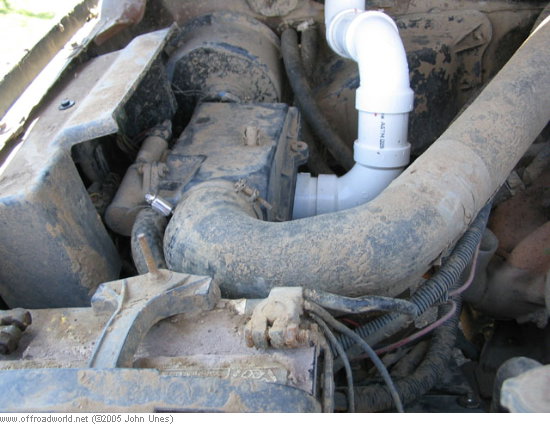
Begin by sealing off the stock inlet to the airbox. This prevents water or debris from entering through the factory intake location. Silicone sealant (or similar) is recommended to ensure a watertight seal.
Step 2: Route the Intake Through the Firewall and Cowl
Determine the best location to route your intake piping through the firewall and cowl. Careful planning is important here—measure twice before cutting.
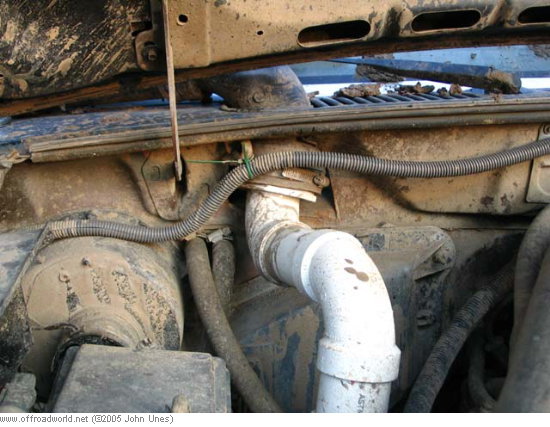
Run 2” PVC pipe from the airbox up to the rubber elbow. At this point, step up to 3” pipe. The connection to the airbox can be made using a PVC compression-style fitting. Remove the compression ring and use the threaded portion to clamp tightly to the airbox. Seal the connection thoroughly inside and out using silicone.
Step 3: Build the Snorkel Stack
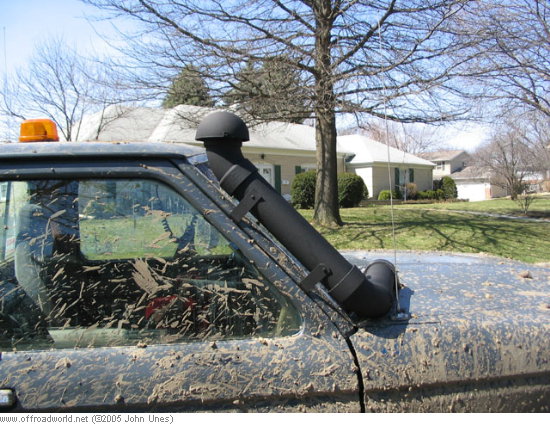
Once the rubber elbow is routed through the cowl, you can begin building the snorkel stack. Approximately 3 feet of 3” tubing will be sufficient for the entire upper section.
- Use an 8–12” section to run horizontally along the cowl, just behind the hood line.
- Attach a 90° elbow to turn the pipe upward along the windshield.
- Add a vertical section (approximately 20”) to follow the contour of the windshield.
- Finish with a 45° elbow to angle the intake forward, keeping it parallel to the ground.
To help keep rainwater out, install a mushroom-style cap or similar vent cover on the inlet.
Step 4: Secure the Snorkel to the A-Pillar
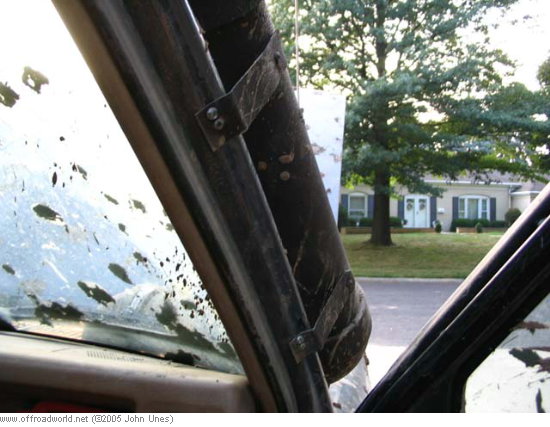
Properly securing the snorkel is critical. Without adequate support, the snorkel can vibrate, loosen, or break.
Use plumber’s strapping or small pieces of sheet metal to fasten the snorkel to the A-pillar. Ensure all mounting points are tight and stable.
Step 5: Seal and Finish
Apply PVC cement to all joints to prevent the pipes from separating and to improve water resistance. Additional silicone sealant can be applied for extra protection.
The original build used spray-on undercoating for the exterior finish, but this tends to crack and fade with sun exposure. A better option is a UV-resistant flat black paint for a cleaner and longer-lasting appearance.
Visibility Considerations
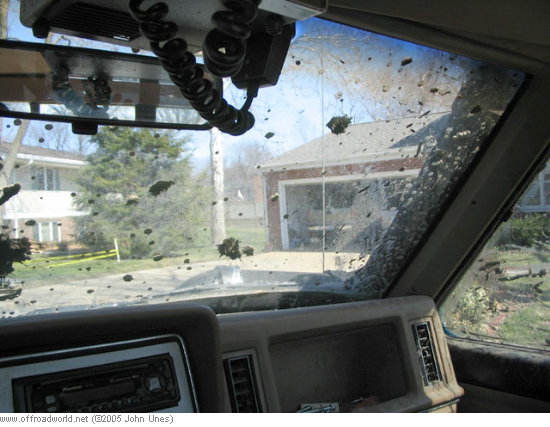
Be mindful of snorkel placement along the A-pillar. Improper positioning can create a significant blind spot on the passenger side. Adjust the routing as needed to minimize obstruction of your field of view.
Pros and Cons of a DIY PVC Snorkel
Pros
- Very low cost compared to commercial snorkel kits
- Easy to source materials from local hardware stores
- Customizable to fit your specific setup
Cons
- Less durable than molded snorkel systems
- PVC can crack or fade with UV exposure over time
- Requires careful sealing to be water-resistant
Frequently Asked Questions
Does a snorkel make my truck waterproof?
No. A snorkel only raises the air intake. Other components such as breathers and electrical systems must also be addressed for safe water crossings.
Will this improve engine performance?
Not significantly. The primary benefit is cleaner, cooler air—not increased horsepower.
Is PVC strong enough for a snorkel?
PVC works well for budget builds, but it is not as durable as commercial snorkel systems and may require periodic inspection.
Related Articles
Making Your Own Intake Snorkel
How to: Install a Safari Snorkel on a 1993 Ford Ranger
Installing a Safari Snorkel on a 1993-1995 Ford Ranger
ARB Snorkel For Your Ford Ranger
2021 Ranger ARB Snorkel Install
Last updated:
About The Author

Jim Oaks is the founder of TheRangerStation.com, the longest-running Ford Ranger resource online since 1999. With over 25 years of hands-on experience building and modifying Ford Rangers — including magazine-featured builds like Project Transformer — Jim has become one of the most trusted authorities in the Ford Ranger off-road and enthusiast space.
Since launching TheRangerStation.com, Jim has documented thousands of real-world Ranger builds, technical repairs, drivetrain swaps, suspension modifications, and off-road adventures contributed by owners worldwide. TheRangerStation.com has been referenced in print, video and online by enthusiasts, mechanics, and off-road builders looking for practical, and experience-based information.